22 Oct 2026
Mapping the Interplay Between Technological Advances and Audience Preferences in Streaming Services
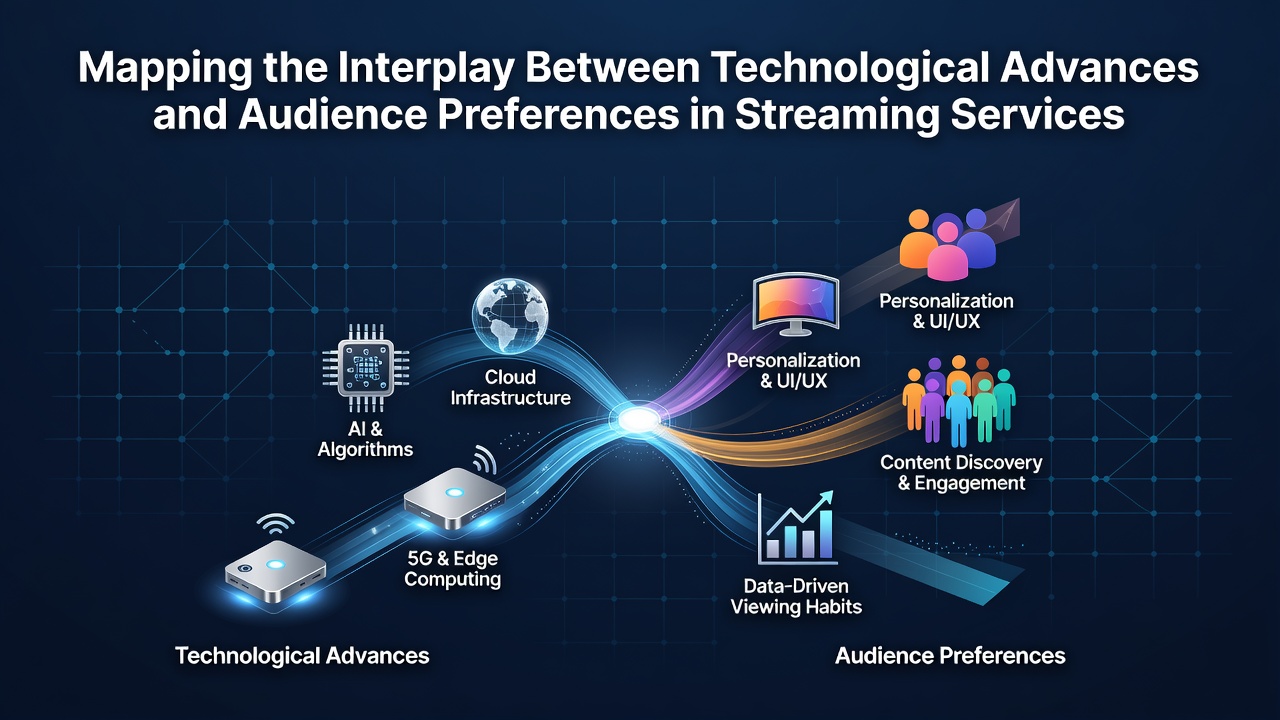
Streaming services have evolved through successive waves of technological upgrades that directly respond to measured shifts in how audiences consume content, and data from multiple regions shows this relationship operates in both directions at once.
Early platforms relied on basic broadband delivery and standard definition playback, yet audience migration toward on-demand viewing quickly prompted investment in adaptive bitrate streaming and content delivery networks that reduced buffering incidents across household connections. Researchers tracking these patterns note that once latency dropped below noticeable thresholds, completion rates for longer episodes rose measurably, which in turn encouraged producers to extend season lengths and experiment with serialized narratives.
Technological Milestones and Measured Viewer Responses
High dynamic range and 4K resolution became widely available on major services around 2016, and subsequent adoption surveys indicated that subscribers with compatible displays increased session durations by noticeable margins compared with standard definition households. Mobile optimization followed, incorporating smaller screen considerations and data-saving modes, while global usage statistics revealed a steady rise in viewing on smartphones and tablets that now accounts for a substantial share of total hours watched in many markets.
Personalization algorithms represent another layer where engineering decisions intersect with preference data. Recommendation engines trained on watch history, pause points, and skip behavior now surface titles with higher predicted relevance, and platform reports show these systems contribute to reduced churn when they surface content that aligns closely with individual patterns. Observers tracking algorithm updates point out that refinements in metadata tagging and collaborative filtering have allowed services to surface niche titles that previously remained undiscovered, expanding the effective catalog without increasing marketing spend.
Regional Data and Platform Adaptations
European audiences have demonstrated particular responsiveness to features such as offline downloads and multi-language audio tracks, according to figures compiled by the European Audiovisual Observatory. Services operating across the region adjusted subtitle timing and dubbing pipelines to match these documented preferences, resulting in higher retention rates in non-English speaking territories. In parallel, Australian Communications and Media Authority reports highlight growing demand for local content discoverability tools, prompting platforms to refine search interfaces and category structures that prioritize regional productions alongside international catalogs.
Bandwidth improvements and 5G rollout have further altered consumption contexts, enabling higher quality streams on the move. Usage logs from several providers indicate that outdoor and commute viewing sessions increased once network conditions supported consistent high-bitrate delivery, which has encouraged development of vertical video formats and shorter episode structures suited to fragmented attention windows.
Interactive and Immersive Experiments
Choose-your-own-adventure formats and interactive episodes appeared as direct responses to audience surveys expressing interest in greater agency over story outcomes. Early trials recorded completion metrics that varied significantly by age group and device type, leading developers to refine input mechanics and branch complexity for subsequent releases. Virtual reality pilots have followed a similar trajectory, with hardware compatibility and motion comfort emerging as key variables that determine whether experimental content reaches broad testing or remains limited to niche audiences.
October 2026 marks the scheduled expansion of several cloud gaming integrations within major streaming libraries, an adjustment tied to subscriber feedback requesting unified access to both linear and interactive entertainment on single devices. Industry tracking shows these additions coincide with hardware improvements that reduce input lag, addressing previous barriers that limited crossover adoption.
Feedback Loops and Future Adjustments
Live event streaming capabilities have expanded in response to documented spikes in concurrent viewership during major sports and entertainment broadcasts. Platforms have introduced synchronized chat overlays and multi-angle options where engagement data indicated demand, while simultaneously refining content moderation systems to maintain quality at scale. These features illustrate how real-time analytics now feed directly into product roadmaps, shortening the interval between preference signals and feature deployment.
Artificial intelligence tools for automated captioning and scene description continue to advance, driven by accessibility requirements and user requests for improved support across diverse viewing environments. Accuracy benchmarks published by research institutions demonstrate steady gains that correlate with increased usage among audiences who previously faced barriers to full participation.
Conclusion
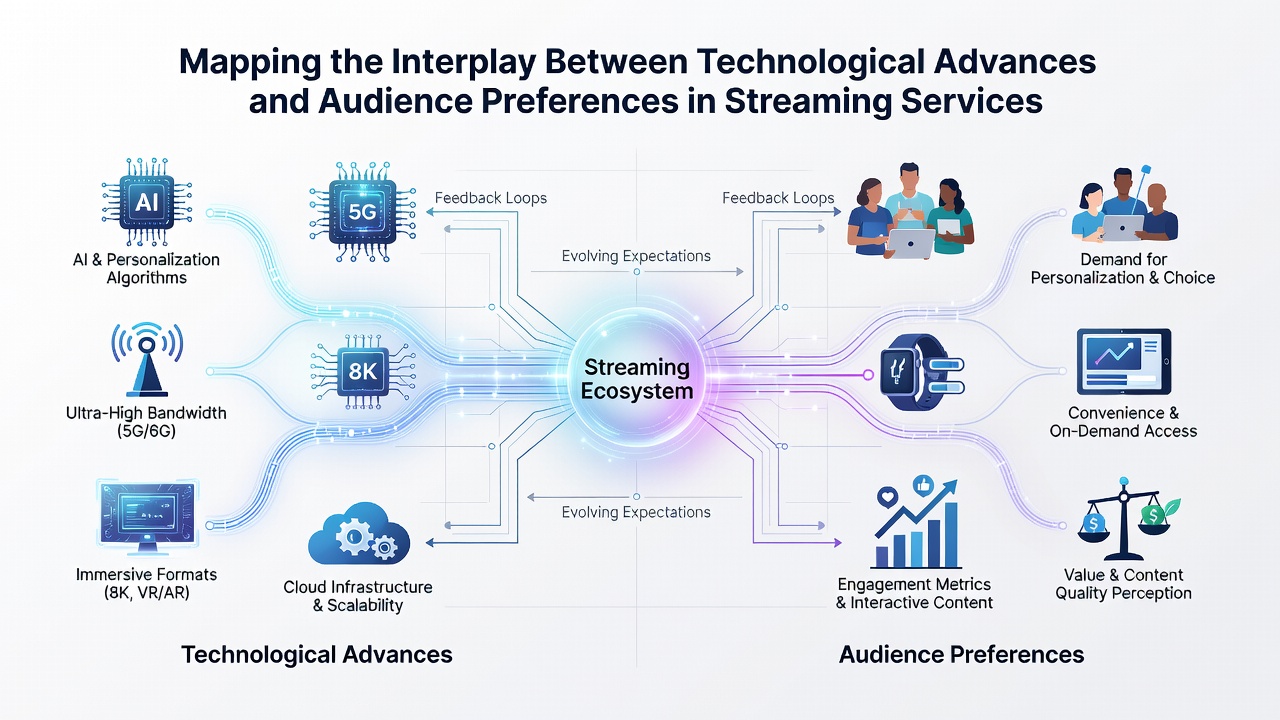
The documented relationship between technological capability and audience behavior in streaming services operates through continuous measurement and incremental adaptation rather than one-way causation. Platform operators track completion rates, device distribution, and engagement metrics to guide infrastructure investments, while new technical features in turn reshape what viewers expect and how they allocate attention across available libraries. This cycle continues as emerging standards in compression, latency, and personalization intersect with evolving consumption contexts across global markets.